
He said it three times. Nobody got it.
When your toddler's words aren't landing yet, and what to try first.
· Updated
A note from Nicole
Happy Tuesday.
If you have a toddler, you probably know this moment. Your kid tells you something from the back seat or the grocery line, then tells you again, and then a third time, a little louder. As far as they're concerned, they've been perfectly clear, and you still have no idea what they mean.
This week's story
Milo is almost three, and he has a lot to say, though only about half of it lands.
On Thursday he stood at the back door in his socks and said, "Ba-boo. Ba-boo. Mama, BA-BOO."
His mom, Dana, guessed "Balloon?" and he shook his head. She tried "Bubbles?" and got a harder shake. Her mother-in-law, who was staying with them for the week, said, "I think he wants a bath." Milo lay down on the kitchen floor, frustrated that he'd said it three times and still no one understood.
Keep reading. It’s free.
Dana knew that move. In his mind, he'd said the word just right, and it still hadn't worked.
She almost said "Okay, buddy, yes," the way you do when you just want it to stop. But the last time she'd tried that, he went quiet for a second, looked right at her, and started again even louder.
So instead she sat down on the floor next to him. "I'm not getting it," she said. "That's my ears, not you. Can you show me?"
Milo stayed put at first, and Dana didn't say anything else. She just waited, which felt like a very long time and was probably about ten seconds.
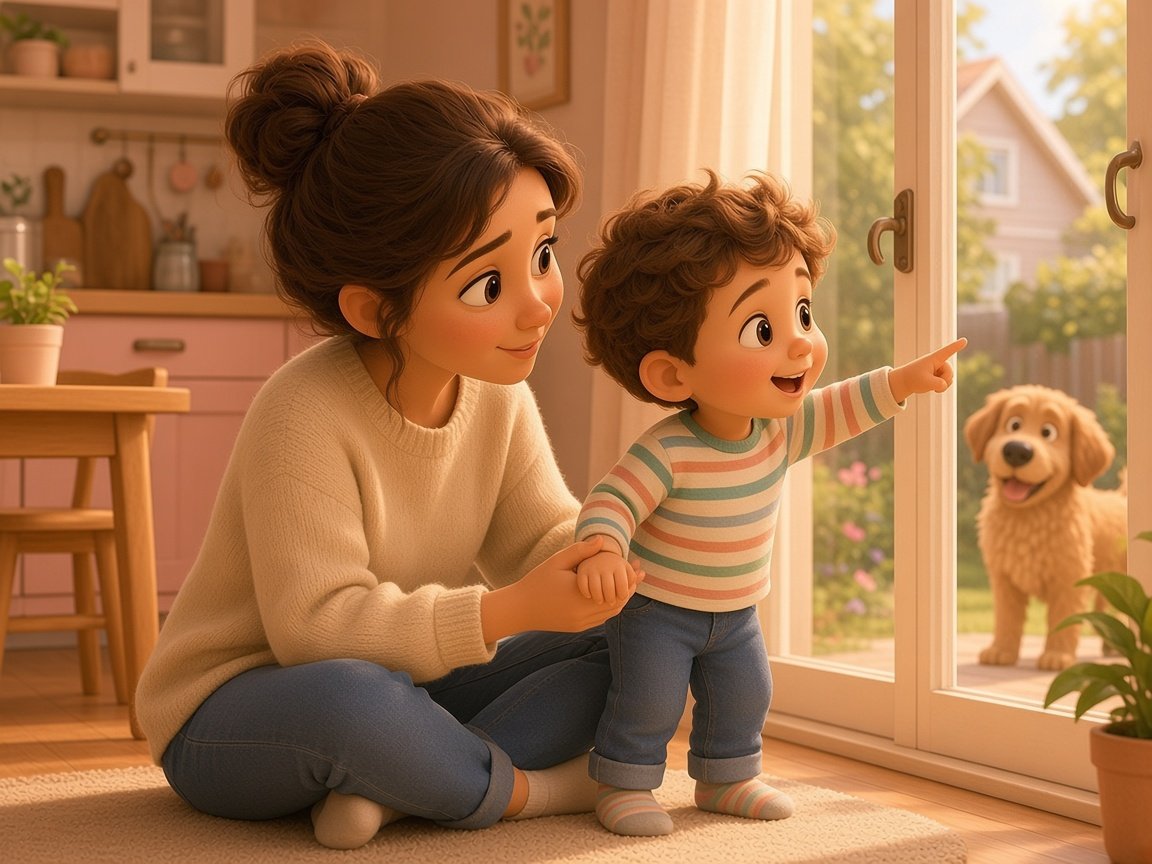
Then he got up, took her hand, and pulled her over to the back door, where he pressed his face to the glass and pointed at the yard.
Outside, there was a ball, a bird feeder, the lawnmower and, sitting right in the middle of the grass, the neighbors' very large brown dog.
"Bamboo?" Dana said. "Is that Bamboo?"
"BA-BOO," said Milo, like she was finally catching up.
"Bamboo is in our yard," Dana said. "You wanted me to see Bamboo." He nodded and stayed at the glass until Bamboo wandered back home.
Later, her mother-in-law said she never would have figured that one out. Dana admitted she almost hadn't either.
Talk soon, Nicole
The practitioner's take

Speech Language Pathologist
Toddlers are often hard to understand, and that's an expected part of learning to talk. ASHA's milestones note that between 2 and 3, a child's speech is getting clearer but may still be hard for people outside the family to follow. By 4, most people should be able to understand most of what they say.
So when it turns into a meltdown, it often isn't about the word itself. It's about saying something the best way they can and watching it not work. There's research on this, too: a Northwestern study of about 2,000 families found that toddlers with fewer spoken words had more frequent and more intense tantrums.
When you don't understand, try not to pretend you did, because it can feel to your child like you weren't really listening. Instead, say so plainly and take the blame yourself: "My ears aren't getting it. Can you show me?"
From there, give them other ways to get the message across. Pointing, taking your hand, or choosing between two things you hold up all count. It's fine to ask "one more time?" when you simply missed it, but try not to make them repeat a word just to get the sounds right. Once you know what they meant, say it back clearly ("Bamboo is in our yard") and move on.
What's the word at your house nobody else can decode? Join the discussion →
One little idea
Speech Language Pathologist
Count to ten before you guess.
The next time the words aren't landing, get down to their level, stop talking, and count to ten in your head before you start guessing. The Hanen Centre suggests waiting up to 10 seconds, which feels a lot longer than it sounds. That pause gives your child room to point, pull you somewhere, or try again in their own way.
Still figuring it out
Speech Language Pathologist
The hardest part for me is knowing when to stop guessing. Sometimes the fourth guess is the one, and sometimes it just makes things worse. When you've run out of ideas, it's okay to say something like "I really want to know. Let's try again after snack," and then let it go. If it matters to them, they'll usually find a way to bring it back.
Recommendations
Speech Language Pathologist
- 🖐️ Give them a way to point: When the word isn't landing, a communication board with everyday pictures lets them show you instead of saying it again louder. Make one →
- 💛 Point to the feeling: A feelings chart with simple faces they can point to when the words aren't there yet, including after a big mad on the floor. Get the chart →
- ✋ When talking is hard: Break and help cards they can hand you for help, wait, or a break, so they don't have to get the sounds right first. Print the cards →
- 📚 Read it together later: After the floor, it helps to read a short picture book about this kind of moment, with your child as the main character. You can make one in Storybook Studio.
- 💬 Say hi to Nicole: Follow @nickyptheslp for speech and language ideas you can use at home.
Mom-topia

What does your Mom-topia look like?
More from Nicole Schwartz